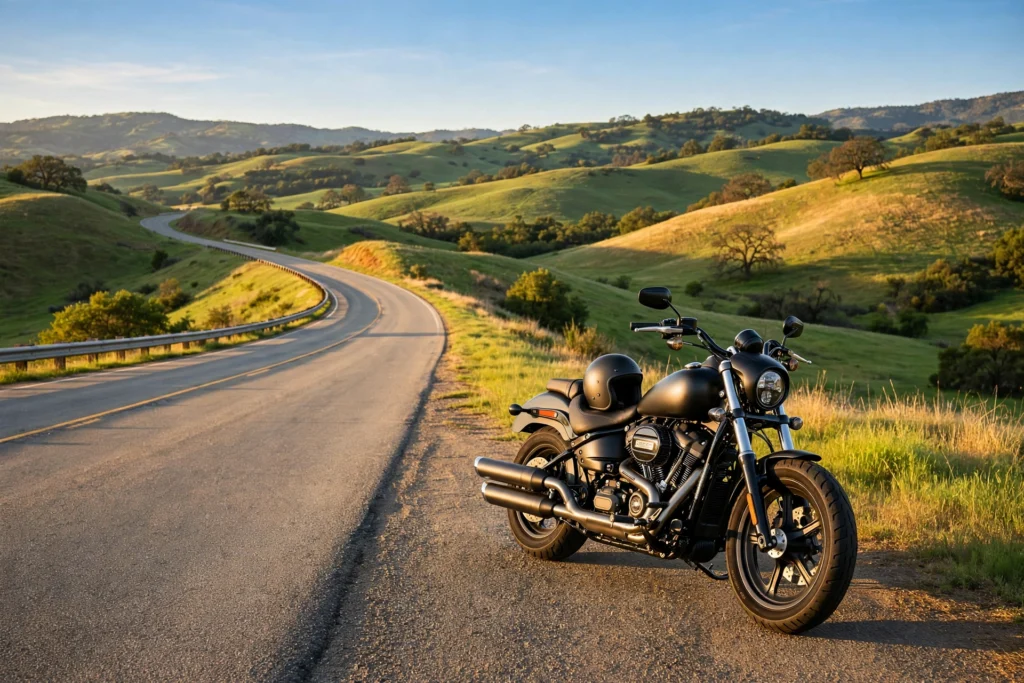
A motorcycle is not a car with two fewer wheels, and motorcycle insurance is not car insurance with a different label. The risks are different, the injuries are different, and the coverage that actually protects you is different too. A low-speed drop in a parking lot can cost thousands in plastic and chrome. A crash at highway speed can mean a hospital bill that dwarfs the value of the bike itself. And in most states, riding without insurance is illegal — get caught, and the fines and license suspension can follow you for years. This guide explains the best motorcycle insurance in the USA for 2026: what coverage you really need, what it costs, and which insurers are worth your money.
What motorcycle insurance actually covers
Motorcycle insurance is built from the same building blocks as car insurance, but the way each piece works for a rider is different. Liability coverage is the foundation, and in almost every state it is legally required. It pays for injuries and property damage you cause to other people in a crash you are at fault for. Every state sets a minimum — often something like $25,000 per person and $50,000 per accident for injuries — but those minimums were set decades ago and are far too low for a serious crash. A single emergency room visit can exceed a state minimum. Most experienced riders carry at least $100,000 per person and $300,000 per accident, and many add an umbrella policy on top. Collision coverage pays to repair or replace your own bike after a crash, no matter who was at fault, minus your deductible. Comprehensive coverage pays for everything else that can happen to a parked or stored bike: theft, vandalism, fire, flood, hail, and hitting an animal. Motorcycles are stolen far more often than cars relative to their numbers, and a bike is much easier to load into a truck and drive away — so comprehensive coverage matters more for riders than it does for drivers. Uninsured and underinsured motorist coverage is the coverage riders most often regret skipping. It pays your medical bills and lost wages when the other driver has no insurance or not enough of it. Around one in eight drivers on American roads is uninsured, and the share is higher in some states. On a motorcycle, you are the one who gets hurt, so this coverage protects your body, not just your bike. It is cheap relative to what it covers, and it is the first upgrade worth buying. Medical payments coverage, often called MedPay, pays your medical bills and your passenger’s after a crash, regardless of fault, up to a limit you choose — usually $1,000 to $10,000. It is especially useful because health insurance may not cover everything after a crash, and it pays quickly while the bigger claims are still being sorted out. Then there are the rider-specific extras. Accessory coverage pays for the custom parts that make your bike yours: saddlebags, a new exhaust, a fairing, upgraded suspension, chrome, and a top case. A standard policy often covers only $1,000 to $3,000 of accessories, so if you have added several thousand dollars of parts, you need to raise that limit or list them separately. Gear coverage pays for your helmet, jacket, gloves, and boots if they are damaged in a crash — a good helmet alone costs $400 or more, and a full set of riding gear can easily pass $1,500. Roadside assistance built for motorcycles is worth having too: a car tow truck cannot always handle a bike, and a policy that sends a flatbed with motorcycle experience saves a bad day from becoming a disaster. Trip interruption coverage pays for a hotel and a rental if your bike breaks down far from home.
How much does motorcycle insurance cost in 2026?
Motorcycle insurance is usually much cheaper than car insurance, but the range is wide. A typical rider in the USA pays somewhere between $200 and $500 a year for a standard policy with liability, collision, and comprehensive coverage. A young rider on a high-performance sport bike in a big city can pay $1,000 or more a year. An experienced rider on a small cruiser in a quiet suburb might pay under $150. Several factors drive the price. The bike itself matters most: engine size, style, and value. Sport bikes cost the most to insure because they crash more often and at higher speeds; cruisers and touring bikes are cheaper; small-displacement bikes are cheapest of all. Your age and riding experience matter too — riders under 25 pay far more, and the price drops steadily with a clean record. Where you live matters: dense cities with more theft and traffic cost more than rural areas, and some states are simply more expensive than others. Your driving record follows you onto the bike — a speeding ticket or a DUI raises motorcycle premiums just as it raises car premiums. How you use the bike matters as well: a bike ridden daily to work costs more to insure than one ridden on weekends only, and a bike stored in a garage costs less than one parked on the street. Your credit history plays a role in most states too, as it does with car insurance. The deductible you choose changes the price directly. A $500 deductible costs more per year than a $1,000 deductible, because the insurer pays out more often on small claims. If you can afford to pay $1,000 out of pocket after a crash, raising the deductible is one of the easiest ways to cut your premium — but only if the savings are real. Compare both options before you decide.
How to choose a motorcycle insurer: five things that matter
With a dozen serious insurers in the market, focus on five things and the choice gets simple. First, the coverage options for riders, not drivers. A good motorcycle insurer offers accessory coverage with generous limits, gear coverage, roadside assistance designed for bikes, and trip interruption coverage. If an insurer treats your motorcycle like a small car, its policy will leave gaps exactly where riders need protection most. Second, the total cost for the same coverage. Never compare a bare-minimum quote from one insurer with a full-coverage quote from another. Get quotes with identical limits and deductibles from at least three insurers, and compare the annual premium for the whole package. A quote that looks cheap usually is — because it is missing something. Third, how claims are actually handled. Read recent customer reviews about claims, not about buying the policy. Does the insurer have adjusters who understand motorcycles? Does it let you choose your own repair shop, or force you into its network? Does it pay for original manufacturer parts or only aftermarket replacements? A cheap premium means nothing if the claim takes three months and your bike comes back wrong. Fourth, discounts you can actually use. The best insurers offer a long list: a discount for completing a Motorcycle Safety Foundation course, a discount for bundling your motorcycle with your car or home insurance, a discount for paying the full year upfront, a discount for a clean riding record, a discount for anti-theft devices and alarms, and a discount for belonging to a riding association. Some of these stack, and together they can cut a premium by a third or more. Fifth, the company’s stability and specialisation. An insurer that writes millions of motorcycle policies understands bikes. It has the claims data, the repair networks, and the products for custom and vintage machines. A general insurer that writes a few thousand motorcycle policies as a side business may be cheaper, but it may also be slower and less flexible when something unusual happens — like a custom build or a 30-year-old classic.
The best motorcycle insurance in the USA for 2026
The best motorcycle insurance for you depends on your bike, your riding history, and what you want covered. Always check the current rates and features on the insurer’s own website before buying, because pricing and discounts change. The insurers below are the ones that consistently come out on top for riders in 2026. Best overall: Progressive is the largest motorcycle insurer in the USA, and it is the strongest all-round choice in 2026. Its policies include $3,000 of accessory coverage as standard, with higher limits available, plus gear coverage, roadside assistance, and trip interruption coverage built in. It insures almost anything with two wheels — cruisers, sport bikes, touring bikes, scooters, dirt bikes, and custom builds — and its online quote tool is the fastest in the industry. Discounts include the safety course discount, multi-policy bundling, paying in full, and a discount for being a member of a riding association. The one gap is price: Progressive is not always the cheapest for every rider, so compare its quote against at least one competitor before you buy. Best for low prices: GEICO is the best choice if the premium is your main concern. It consistently quotes some of the lowest motorcycle rates in the country, especially for experienced riders with clean records and smaller bikes. Its discounts are generous — safety course, bundling with a car policy, paying upfront, and anti-theft devices — and its app and online tools are excellent. The trade-off is coverage depth: accessory coverage is available, but the standard limits are lower than Progressive’s, and you need to ask for the extras rather than getting them by default. For a rider with a stock bike and a tight budget, GEICO is hard to beat. Best for high-risk and custom bikes: Dairyland is the best choice for riders other insurers turn away or overcharge — young riders, riders with a ticket or an accident on their record, and owners of custom or heavily modified bikes. Dairyland specialises in non-standard risks and writes policies for bikes many insurers will not touch. It also offers solid accessory coverage for custom parts, which matters when your bike is not stock. Prices are higher than a standard insurer’s, but for a rider who cannot get a good quote elsewhere, Dairyland is often the only realistic option — and it is a much better one than riding uninsured. Best for Harley owners: Harley-Davidson Insurance, underwritten by Sentry, is built specifically for Harley riders. It covers genuine Harley parts, offers higher accessory limits suited to the way Harleys are customised, and includes roadside assistance from a network that knows the bikes. If you ride a Harley and have invested in chrome, pipes, and custom paint, this is the policy designed for exactly that. It is not the cheapest option, and it is not for other brands, but for a Harley owner the coverage fit is unmatched. Best for specialty and vintage bikes: Markel is the best choice for unusual machines — vintage bikes, collectibles, trikes, and custom builds. Markel offers agreed-value coverage, which means you and the insurer agree on the bike’s value when the policy starts, and that is what you get if it is totaled — no arguing about depreciation after a crash. That matters enormously for a classic bike whose market value is hard to pin down. Markel also covers spare parts and accessories well. It is a specialist, so its prices can be higher for ordinary bikes, but for a special machine it is the right insurer. Best for bundling: Allstate is the best choice if you already insure your car or home with Allstate and want everything in one place. Its multi-policy discounts are among the largest in the industry, and bundling a motorcycle with a car and a home policy can cut the total bill significantly. Allstate also offers new-bike replacement coverage for the first few years, which pays for a brand-new bike rather than the depreciated value if yours is totaled. Its motorcycle app and roadside service are solid, and having one agent for everything simplifies claims when a single accident involves both your car and your bike.
Motorcycle insurance vs car insurance: the key differences
The first difference is the law. Almost every state requires liability insurance for motorcycles, just as for cars, but a few states do not require it at all — Florida, for example, does not mandate motorcycle liability insurance, though it does require proof of financial responsibility after a crash. Do not take that as permission to ride bare: without insurance, one at-fault crash can mean a lawsuit that takes your savings and your wages. The second difference is the injury risk. A car driver walks away from many crashes that would hospitalise a rider. That is why uninsured motorist coverage and MedPay matter far more on a bike — they protect you, the person, not the machine. Many riders carry low liability limits because the bike is cheap, forgetting that the expensive part of a crash is the human being on it. The third difference is theft. Motorcycles are stolen at a much higher rate than cars, and a stolen bike is rarely recovered. Comprehensive coverage is not optional for most riders — it is the only thing standing between you and losing the whole value of the bike overnight. The fourth difference is seasonality. In northern states, many riders store their bikes for the winter. Some insurers offer a lay-up or storage option that drops collision coverage while the bike is parked and keeps comprehensive coverage active, cutting the premium for the months you are not riding. If you park your bike for four months a year, ask about it — but never drop liability entirely if the bike is registered, and never cancel comprehensive coverage, because theft and fire do not take the winter off.
Discounts that actually save money
The single most valuable discount is the safety course. Completing an approved Motorcycle Safety Foundation Basic RiderCourse typically cuts your premium by 10 to 15 percent, and in some states insurers are required to offer it. The course also makes you a better rider, which is worth more than the discount. Bundling is the second big one. Insuring your motorcycle with the same company as your car, home, or renters policy usually saves 10 to 20 percent on the motorcycle premium, and sometimes more across all your policies. Paying the full annual premium upfront instead of monthly often saves another 5 to 10 percent, because insurers charge fees for instalments. Other discounts add up: a clean riding record for three to five years, an approved alarm or GPS tracker, storing the bike in a locked garage, being a member of a riding club or association, and insuring more than one bike on the same policy. Ask every insurer for its full discount list when you get a quote — agents do not always volunteer discounts you have to ask for.
Mistakes riders make with motorcycle insurance
The most common mistake is buying only the state minimum liability coverage. The minimum exists so that you are legal, not so that you are protected. One serious crash with injuries can produce bills ten times the minimum limit, and the difference comes out of your own pocket — your savings, your wages, your future. Buy more liability than the law requires. The second mistake is skipping uninsured motorist coverage to save a few dollars a month. The driver who hits you is the one most likely to be uninsured or underinsured, and on a motorcycle you are the one who pays the medical price. This is the coverage that protects your body, and it is cheap. The third mistake is forgetting the accessories. Riders spend thousands on pipes, seats, luggage, and lights, then discover after a crash that the standard policy covers only the first $1,000 or $3,000 of it. Add up what your accessories are worth and raise the limit to match — or list the expensive items separately. The fourth mistake is letting a policy lapse in winter. A gap in coverage can raise your next premium, and in some states it can trigger fines or a license suspension if the bike stays registered. If you are not riding, use a storage option rather than cancelling. The fifth mistake is not shopping around every year or two. Insurers re-price their motorcycle books constantly, and the cheapest company for you last year may not be the cheapest this year. Get fresh quotes annually, and always compare identical coverage — same limits, same deductibles, same extras.
How to set up motorcycle insurance properly
Start by deciding your coverage: liability at least $100,000 per person and $300,000 per accident, uninsured motorist coverage to match, collision and comprehensive with a deductible you can afford, MedPay of at least $5,000, and accessory coverage that matches what you have actually bolted onto the bike. Then get quotes from at least three insurers with those exact numbers, so you are comparing like with like. When you buy, have the bike’s details ready: year, make, model, VIN, mileage, where it is stored overnight, and how many miles you ride a year. Tell the insurer about any modifications — undeclared custom parts may not be covered, and a modified bike can change the premium. If you completed a safety course, have the certificate ready; if you belong to a riding association, mention it. After the policy starts, read the declarations page and check three things: the liability limits are what you asked for, the accessory limit covers your parts, and the bike’s value is right. Take photos of the bike and its accessories and keep the receipts — if you ever file a claim, that record is what proves what was on the bike. Review the policy once a year, and update it the day you add an expensive accessory, not after the crash.
Related reading
If you are rounding out your coverage, read our guide to the Best Umbrella Insurance in the USA for 2026, our roundup of the Best Renters Insurance in the USA for 2026, and our guide on How to Compare Homeowners Insurance Quotes in the USA.
The bottom line
The best motorcycle insurance in the USA for 2026 depends on your bike and your riding life: Progressive for the best all-round cover, GEICO for the lowest price, Dairyland for high-risk and custom bikes, Harley-Davidson Insurance for Harley owners, Markel for vintage and specialty machines, and Allstate if you want everything bundled in one place. Whichever you choose, do not ride on the state minimum — carry real liability limits, keep your uninsured motorist coverage, cover the accessories you actually own, and take the safety course discount. A motorcycle is a small machine carrying something irreplaceable: you. Insure it that way.
This article is for general information only and is not insurance advice. Coverage options, prices, and state requirements vary and change over time — check the details on the insurer’s own website and confirm your state’s rules before buying a policy.